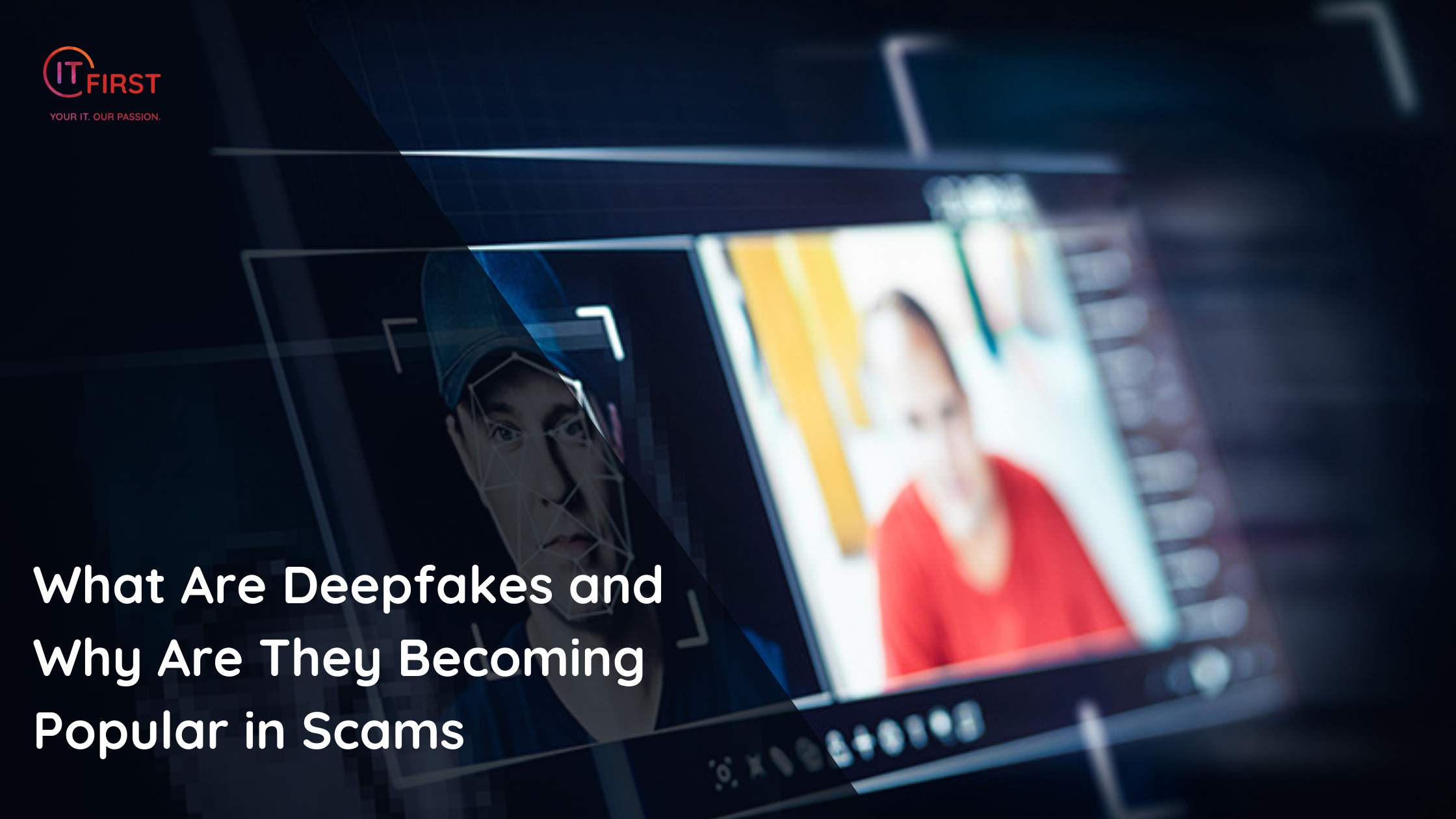
In the evolving world of digital fraud, one of the more alarming trends is the rise of deepfakes — videos, audio, or images that are synthetically generated or manipulated using artificial intelligence (AI) to convincingly impersonate real people. These fake media assets are becoming an increasingly common tool for scammers because they’re highly persuasive and can bypass many traditional defenses.
What Are Deepfakes?
Deepfakes are AI-based media created using techniques like generative adversarial networks (GANs) or deep learning models that replace or synthesize a person’s image or voice. Wikipedia+2miteksystems.com+2
They can range from fairly amateurish to near-perfect, and thanks to advances in AI tools, the barrier to creating them is dropping rapidly. WIRED+1
Why Scammers Use Deepfakes
The reason deepfakes are attractive to scammers comes down to trust and realism:
- Impersonation of trusted figures: Fraudsters can mimic a CEO’s face and voice, or a family member’s voice, to trick someone into transferring money or sharing sensitive info. Bankers Trust+1
- Emotional manipulation: When you see or hear someone you recognise asking for help (even if via a deepfake), your instinct might override caution. Mission Fed Credit Union
- Low cost, high scale: Because tools to produce deepfakes are easier to access, fraudsters can run campaigns at scale with lower investment. Feedzai+1
- Breaking detection mechanisms: Traditional methods of verifying identity (seeing a face, hearing a voice) become less reliable when that face or voice can be fake. Unit 42+1
Common Deepfake Scam Scenarios
- Business email / vendor fraud: A deepfake video or audio of a company executive instructing an employee to transfer funds to a fraudulent account. cybersecuritydive.com
- Family impersonation: Scammer uses a cloned voice of a family member saying they’re in urgent trouble and need money. National Council on Aging+1
- Fake endorsements: Videos of celebrities supposedly promoting investment schemes or products which are scams. IBM+1
- Romance and social engineering: Deepfake-altered faces or voices used to cultivate trust with a victim and then request money. Bankers Trust
How to Protect Yourself
- Always verify unusual requests for money or personal info using a second channel (call the person directly using a known number).
- Be sceptical of video or audio messages that seem urgent or out of character — check for inconsistencies (lighting, voice tone, odd pauses).
- Keep communication channels secure (use official apps, avoid clicking unsolicited links).
- For businesses: implement multi-factor verifications for high-risk transactions, and train employees to recognise sophisticated impersonation attacks.
This post was written by AI and reviewed for quality and accuracy by a real human.