Cybersecurity has changed dramatically. Businesses can no longer rely on a firewall around the edge of their network and assume that everything inside it is safe. Modern businesses operate across cloud platforms, mobile applications, remote devices, third-party services and web-based systems, creating a much larger attack surface for cybercriminals to target.
For South African businesses, the stakes are particularly high. Organisations are dealing with increasingly sophisticated cybercrime while also facing growing expectations around the protection of personal information under the Protection of Personal Information Act (POPIA).
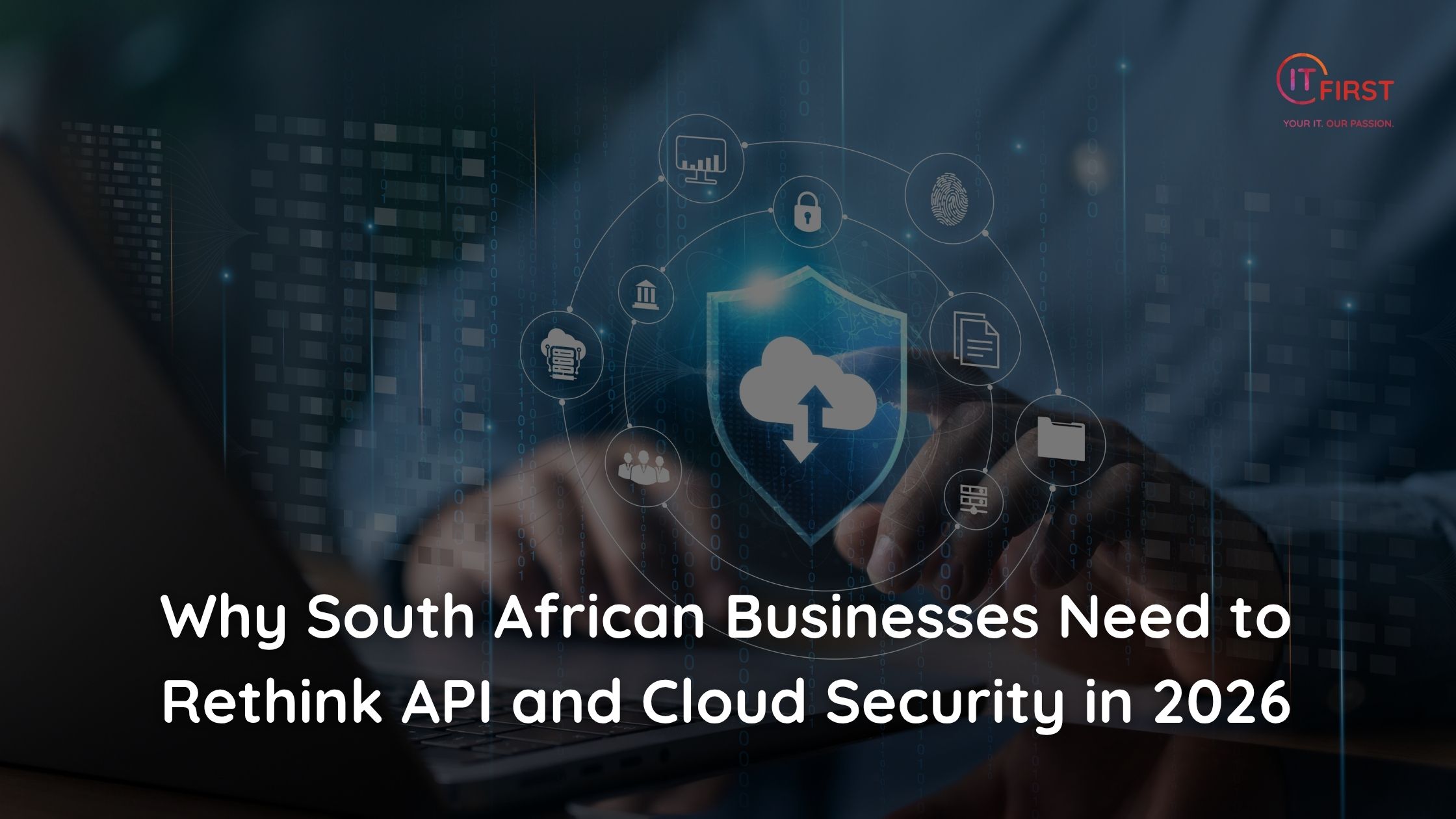
One of the biggest challenges is that some of the most important components of a modern business are not necessarily visible to customers: APIs, cloud databases, authentication systems and application infrastructure.
These systems keep businesses connected, but if they are poorly configured or inadequately protected, they can also provide attackers with a direct route to sensitive information.
The question businesses should be asking in 2026 is no longer simply “Do we have a firewall?”
It is:
“Can we control and protect every system, application, API and user that has access to our data?”
Why Traditional Perimeter Security Isn’t Enough
Traditional cybersecurity was largely based around a simple idea: protect the network perimeter.
Businesses would secure the office network with:
- Firewalls
- Antivirus software
- Network monitoring
- Password protection
- Physical security
The assumption was that anything inside the network could largely be trusted.
Modern businesses don’t work that way anymore.
Employees may be working remotely, applications may be hosted in the cloud, customers may access systems through mobile apps, and third-party providers may need access to business data.
This means there is no longer one clearly defined “inside” and “outside” of the business network.
This is where Zero Trust security comes into play.
What Is Zero Trust Security?
Zero Trust is based on a simple principle:
Never automatically trust a user, device or application simply because it has gained access to the network.
Instead, every access request should be verified.
A Zero Trust strategy considers factors such as:
- Who is requesting access?
- What device are they using?
- What application are they accessing?
- What information do they need?
- Is the access request unusual?
- Does the user actually require this level of access?
This approach follows the principle of least privilege, meaning users and systems receive only the access they actually need.
For example, an employee who needs access to customer contact details probably doesn’t need access to the company’s entire customer database.
Limiting access reduces the potential damage if an account is compromised.
Why APIs Have Become a Major Security Concern
An API (Application Programming Interface) allows different software systems to communicate with one another.
For example, when you make an online payment, check your delivery status or log into a mobile application, APIs may be working behind the scenes to exchange information between different systems.
Businesses increasingly depend on APIs to connect:
- Websites
- Mobile applications
- Payment systems
- CRM platforms
- Accounting software
- Cloud services
- Customer databases
- Third-party applications
The problem is that every API can potentially become another entry point for attackers.
If an API is poorly secured, an attacker may be able to access information or functionality they should never have been able to reach.
What Can Go Wrong With an Insecure API?
API vulnerabilities can take several forms.
For example, an application may accidentally allow users to access another customer’s information simply by changing an identification number in a request.
Other problems can include:
- Weak authentication
- Excessive permissions
- Poor access controls
- Exposed API keys
- Insufficient encryption
- Lack of rate limiting
- Inadequate monitoring
- Unnecessary API endpoints
These weaknesses can be particularly dangerous because an API may provide direct access to backend systems and databases.
Cloud Misconfigurations Are Another Major Risk
Moving systems to the cloud can provide businesses with flexibility, scalability and cost savings.
However, putting information in the cloud does not automatically make it secure.
One of the biggest risks businesses face is misconfiguration.
Examples include:
- Databases accidentally exposed to the internet
- Storage buckets configured as publicly accessible
- Excessive user permissions
- Weak authentication
- Unsecured API keys
- Unnecessary services left running
The technology itself may be secure, but an incorrect configuration can create a vulnerability.
This is why businesses need to understand the important distinction between cloud security and cloud configuration.
POPIA Makes Data Protection Even More Important
For South African businesses, cybersecurity is not simply an IT issue.
The Protection of Personal Information Act places responsibilities on organisations that process personal information.
Businesses need to consider how information is:
- Collected
- Stored
- Accessed
- Processed
- Shared
- Protected
A cybersecurity incident involving personal information can therefore become both a technical and regulatory problem.
Businesses should also have procedures for identifying and responding to security incidents rather than trying to figure out what to do after a breach has already occurred.
Why Continuous Security Testing Matters
Security cannot be treated as a once-a-year exercise.
Modern applications are constantly changing.
Developers may:
- Deploy new features
- Update APIs
- Change cloud configurations
- Add third-party integrations
- Modify databases
Every change has the potential to introduce a new vulnerability.
This is why businesses are increasingly incorporating security into the development process itself.
Instead of waiting for a security team to discover vulnerabilities after deployment, organisations can use DevSecOps practices to integrate security testing throughout development.
This can include:
- Automated vulnerability scanning
- API security testing
- Code analysis
- Dependency scanning
- Cloud configuration checks
- Penetration testing
The earlier a vulnerability is discovered, the easier and cheaper it usually is to fix.
Threat Modelling: Finding Problems Before Attackers Do
Another important part of modern application security is threat modelling.
Rather than simply building an application and testing it afterwards, developers consider potential attack scenarios during the design stage.
Questions might include:
- What happens if a user’s account is compromised?
- What happens if an API key is stolen?
- What information could an attacker access?
- What happens if a third-party service is compromised?
- Which systems could an attacker reach from one compromised account?
This allows developers and security teams to address weaknesses before the application reaches production.
What Should South African Businesses Prioritise?
Businesses don’t necessarily need to spend enormous amounts of money on cybersecurity to make meaningful improvements.
A good starting point is to focus on the fundamentals.
1. Audit Your APIs
Businesses should know:
- Which APIs they have
- What information each API can access
- Who can use them
- What authentication they use
- Whether unused APIs are still active
You cannot secure an API that you don’t know exists.
2. Review Cloud Permissions
Regularly review who and what has access to cloud systems.
Remove:
- Unused accounts
- Unnecessary permissions
- Old credentials
- Unused services
Access should be based on what a person or application actually needs.
3. Implement Multi-Factor Authentication
MFA should be enabled for important systems wherever possible.
This is particularly important for:
- Cloud administration
- Financial systems
- Developer platforms
- VPNs
- Administrative accounts
4. Encrypt Sensitive Information
Sensitive information should be protected both when it is stored and when it is transmitted.
Encryption helps ensure that intercepted or stolen information is significantly harder for attackers to use.
5. Monitor for Unusual Activity
Businesses should know what normal system behaviour looks like.
Security monitoring can help identify:
- Unusual login attempts
- Large data transfers
- Suspicious API requests
- Unexpected database access
- Repeated authentication failures
Detecting unusual behaviour early can make a significant difference during an attack.
Cybersecurity Is Becoming a Business Responsibility
One of the biggest changes in cybersecurity is that responsibility can no longer sit entirely with the IT department.
A data breach can affect:
- Customers
- Employees
- Finances
- Operations
- Reputation
- Regulatory compliance
This means business leaders need to understand the risks and make cybersecurity part of broader business planning.
A secure business isn’t simply one with expensive security software. It is one that understands its data, knows where that data is stored, controls who can access it, and continuously looks for weaknesses.
Final Thoughts
South African businesses are operating in an increasingly connected digital environment. Websites, APIs, cloud platforms and third-party applications make it easier than ever to deliver services and work with customers, but they also create new opportunities for cybercriminals.
Traditional perimeter security alone is no longer enough.
Businesses need to adopt a more comprehensive approach that combines Zero Trust principles, API security, secure cloud configurations, continuous vulnerability testing, threat modelling and strong access controls.
Most importantly, cybersecurity needs to be proactive rather than reactive.
Waiting until a database has been exposed or an attacker has gained access is far more expensive than identifying and fixing the vulnerability beforehand.
In 2026, the strongest security strategy isn’t simply building a bigger wall around your business. It’s making sure that every door, application, API and user is properly verified before they’re allowed through it.
This post was written by AI and reviewed for quality and accuracy by a real human.