Children today are growing up in a world where friendships, school communities and social interactions don’t stop when they leave the classroom. They continue through WhatsApp groups, gaming platforms, TikTok, Instagram, Discord and countless other online spaces.
That connectivity can be positive, but it also creates opportunities for bullying to follow children home.
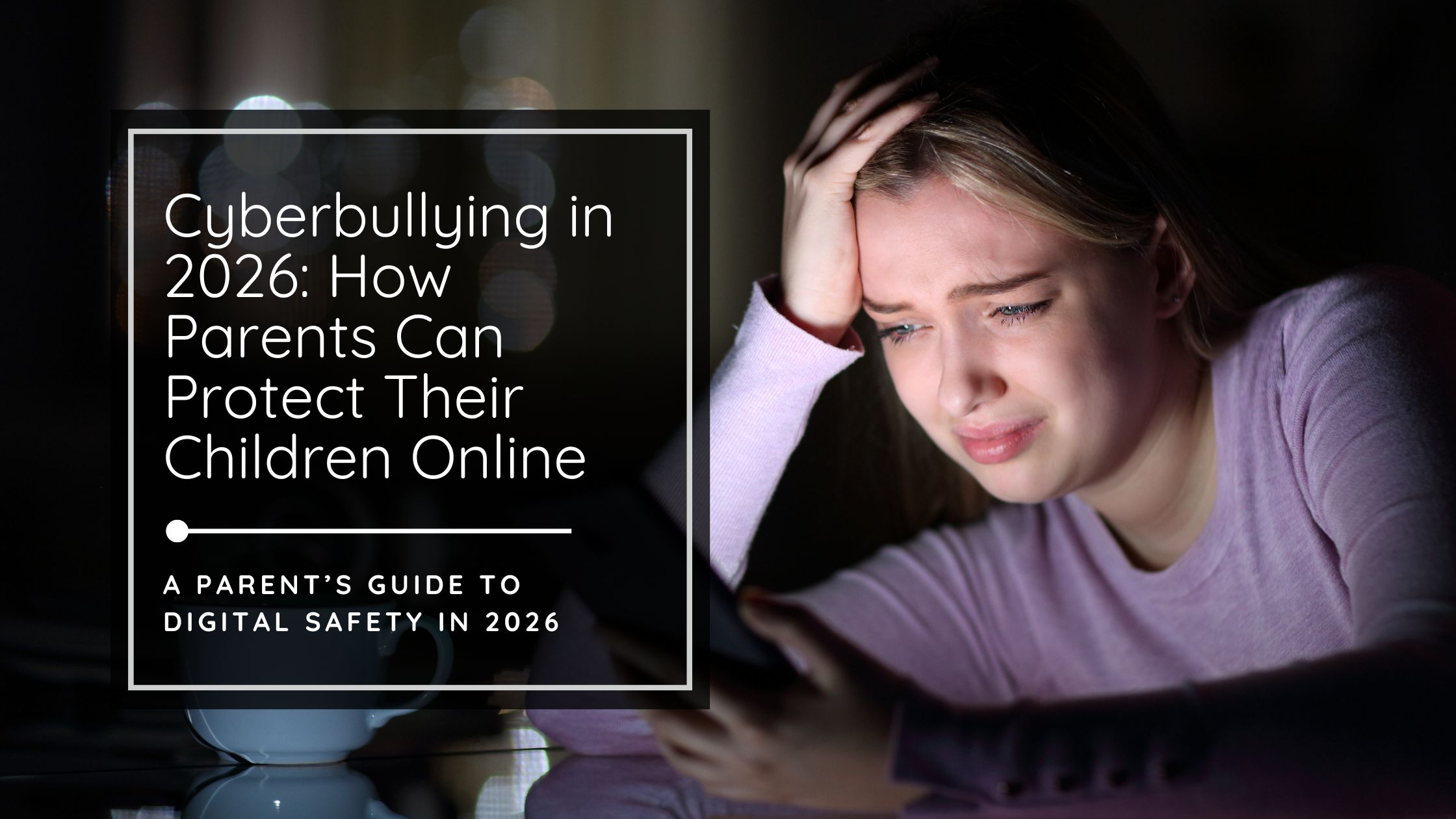
Traditional bullying might have ended when a child left school for the day. Cyberbullying doesn’t necessarily have an off switch. A hurtful message can arrive at midnight, an embarrassing photograph can be shared with hundreds of people within minutes, and a cruel comment can remain online long after the original incident has happened.
For parents, understanding what cyberbullying looks like in 2026 is an important part of keeping children safe.
What Is Cyberbullying?
Cyberbullying is bullying that takes place using digital technologies. It can happen through social media, messaging platforms, online games, forums and other digital spaces.
It can include:
- Sending threatening or abusive messages
- Spreading rumours online
- Sharing embarrassing photographs or videos
- Creating fake accounts to impersonate someone
- Deliberately excluding someone from online groups
- Encouraging others to target a child
- Posting humiliating comments
- Sharing private conversations without permission
- Creating edited or manipulated images of someone
- Repeatedly contacting someone after being asked to stop
One particularly difficult aspect of cyberbullying is that children may feel as though there is nowhere to escape from it.
Why Cyberbullying Can Be So Difficult to Detect
A child being bullied at school may come home visibly upset. Parents may notice changes in behaviour after a difficult day. Online bullying can be much harder to see. A child might simply close their phone and say that everything is fine.
Parents may notice more subtle changes instead, such as:
- Suddenly avoiding their phone
- Becoming anxious when receiving notifications
- Avoiding school or social activities
- Becoming unusually withdrawn
- Deleting social media accounts
- Becoming secretive about online activity
- Losing interest in hobbies
- Having difficulty sleeping
- Becoming upset after using a particular app
None of these signs automatically mean a child is being cyberbullied, but sudden behavioural changes are worth paying attention to.
AI Is Creating New Forms of Cyberbullying
Artificial intelligence has introduced another layer to the problem. Children can now encounter AI-generated or manipulated images, fake conversations, fabricated screenshots and digitally altered photographs. A photograph that originally appeared harmless could potentially be manipulated into something humiliating and shared with other students.
This means parents should teach children that not everything they see online is authentic, and that creating or sharing manipulated content about another person can have serious consequences.
What Should Parents Do If Their Child Is Being Bullied?
The first response should be to listen. A child may already feel embarrassed, frightened or responsible for what happened. Telling them that they should simply “ignore it” can make them feel as though adults don’t understand the situation.
Instead:
Stay calm
Your child needs to know that they can tell you what happened without immediately losing access to every device they own.
Save evidence
Screenshots, messages, usernames, dates and links can be useful when reporting the behaviour.
Use platform controls
Most major platforms provide tools to block, mute and report accounts.
Speak to the school when appropriate
If the bullying involves classmates or affects the child’s school environment, the school may need to become involved.
Don’t retaliate
Responding with threats or abusive messages can escalate the situation and make it more difficult to resolve.
How Parents Can Prevent Cyberbullying
The most effective approach isn’t simply monitoring everything a child does online. It is building an environment where they feel comfortable talking about what happens online.
Parents can:
- Establish age-appropriate digital boundaries
- Teach children about respectful online behaviour
- Discuss what information should remain private
- Explain how screenshots and sharing work
- Encourage children to tell an adult when something feels wrong
- Review privacy settings together
- Teach children how blocking and reporting work
- Have regular conversations about their online experiences
The goal isn’t to make children afraid of the internet. It is to give them the knowledge and confidence to use it safely.
Final Thoughts
Cyberbullying is unlikely to disappear as children’s digital lives continue to grow. However, parents can make a significant difference by recognising the warning signs and creating an environment where children know they can ask for help.
Online safety shouldn’t be a single conversation. It should be an ongoing part of growing up in a connected world.
This post was written by AI and reviewed for quality and accuracy by a real human.