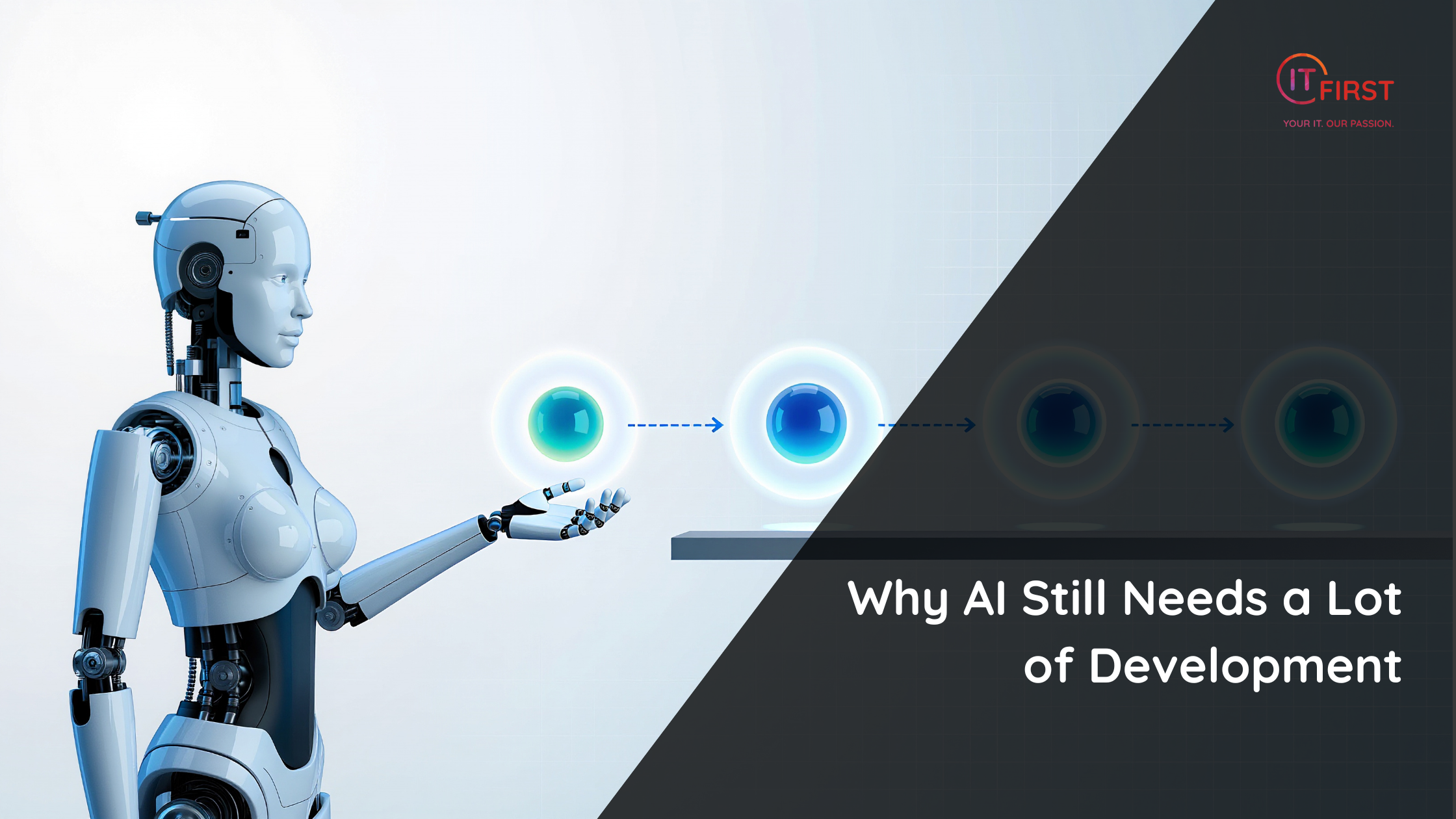
Artificial intelligence has advanced at an astonishing pace, but despite its rapid adoption, it remains a technology that is very much unfinished. While AI tools can generate text, analyze data, and assist with complex tasks, they still fall short in areas that humans often take for granted.
One of the most misunderstood aspects of AI is the idea that it “understands” information. In reality, AI systems do not comprehend meaning or intent. They rely on statistical patterns learned from massive datasets, predicting what comes next based on probability rather than knowledge. This is why AI can sound confident while producing inaccurate or misleading results.
Another major limitation is the quality of the data AI is trained on. AI systems inherit the biases, gaps, and inconsistencies present in their training data. If certain perspectives are underrepresented or skewed, the AI’s outputs will reflect those imbalances. This becomes especially concerning in areas such as hiring, law enforcement, healthcare, and finance, where biased outputs can lead to real-world harm.
AI also lacks common sense reasoning. Humans instinctively understand context, emotion, and cause-and-effect relationships. AI, on the other hand, must be explicitly trained for each scenario and often struggles when faced with unfamiliar situations. This makes it unreliable in environments that require adaptability or emotional intelligence.
Finally, ethical and accountability challenges remain unresolved. AI cannot take responsibility for its decisions, yet it is increasingly used in decision-making processes that affect people’s lives. Until clear regulations and oversight mechanisms are established, human involvement will remain essential.
AI has enormous potential, but meaningful progress depends on continued development, ethical safeguards, and a clear understanding of its limitations.
This post was written by AI and reviewed for quality and accuracy by a real human.