The smart home is no longer something that only exists in futuristic movies.
From switching lights on with your phone to checking what’s happening at home while you’re at work, smart home technology has become increasingly accessible. You don’t need to spend hundreds of thousands of rand turning your house into a fully automated mansion either.
In South Africa, there are now plenty of affordable smart devices that can make everyday life more convenient, improve security and even help you keep an eye on electricity usage.
The trick is knowing which devices are actually useful.
Here are three smart home devices worth considering if you’re looking to make your home a little smarter.
1. Smart Speakers
A smart speaker is one of the easiest ways to start building a smart home.
Devices such as the Google Nest Mini and Amazon Echo Dot combine a conventional speaker with a voice assistant.
You can use them to:
- Set alarms and reminders
- Check the weather
- Play music
- Ask general questions
- Create shopping lists
- Control compatible smart devices
- Set timers while cooking
- Create routines
The real benefit comes when the speaker is connected to other smart devices.
For example, you could say:
“Turn off the lounge lights.”
Instead of getting up and looking for the switch, your smart home assistant can communicate with compatible smart lights and switch them off.
Why They’re Useful in South Africa
Smart speakers can also be particularly useful for routines.
You could create a “Good Morning” routine that turns on selected lights, gives you the weather forecast and starts your morning playlist.
Or you could create a “Goodnight” routine that switches off compatible lights and devices with a single command.
The technology isn’t revolutionary on its own, but the convenience quickly adds up.
2. Smart Plugs
If you’re not ready to replace your home’s appliances with expensive smart versions, smart plugs are one of the easiest places to start.
The TP-Link Tapo P110, for example, can be controlled through an app and includes energy-monitoring functionality.
You simply plug the smart plug into a normal wall socket and connect a compatible appliance to it.
Depending on the model, you can then control that appliance remotely.
This could be useful for:
- Lamps
- Fans
- Certain heaters
- Routers
- Entertainment systems
- Other compatible appliances
Smart Plugs Can Also Help With Energy Awareness
Energy monitoring is one of the more useful features of some smart plugs.
Instead of simply knowing that an appliance is plugged in, you can monitor how much electricity it is consuming.
This can help households identify appliances that are consuming more electricity than expected.
For South African households trying to manage electricity costs, this can be a genuinely practical application of smart home technology.
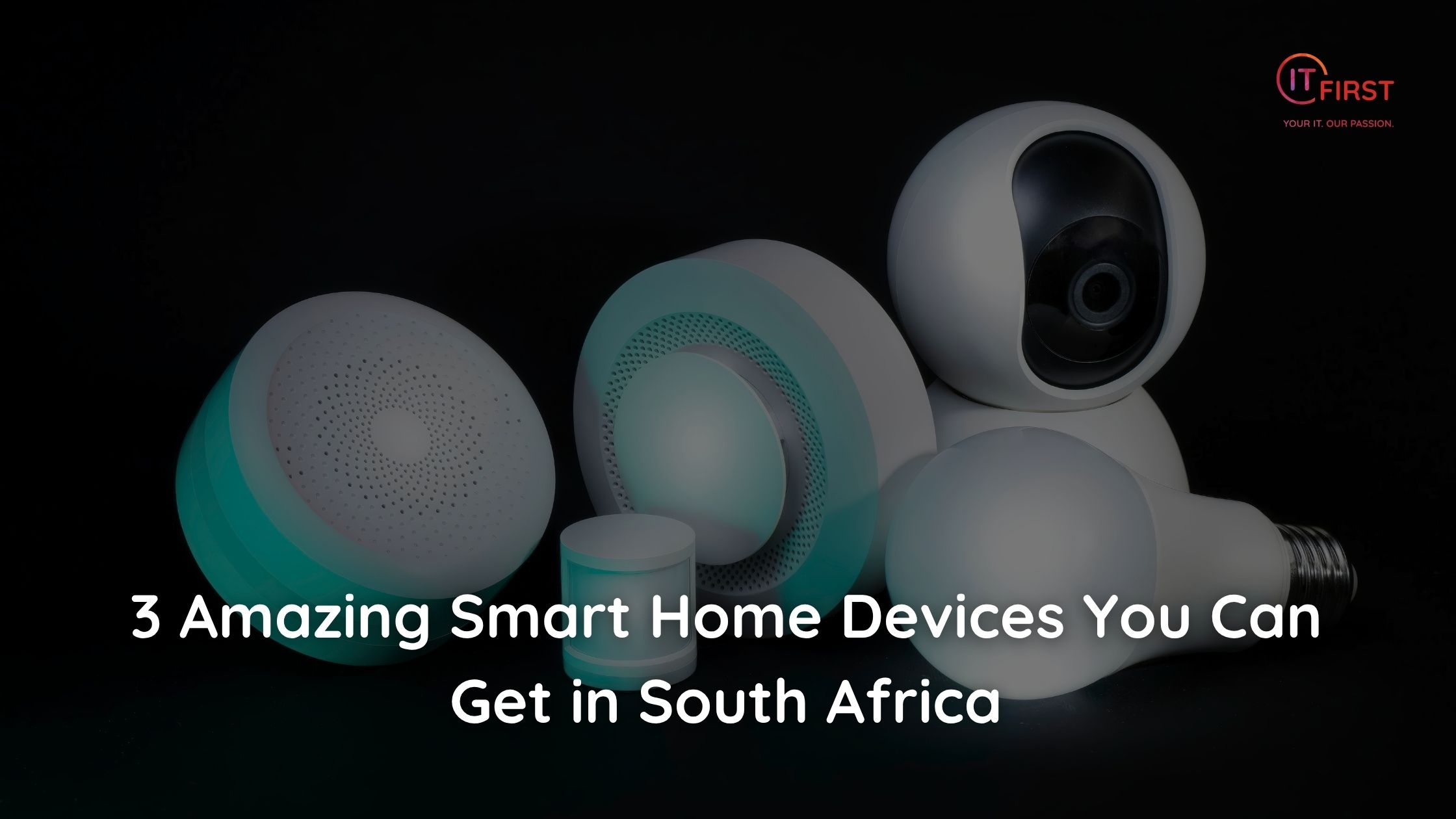
3. Smart Security Cameras
Smart cameras have become considerably more affordable, making home monitoring accessible to more households.
A camera such as the Xiaomi Smart Camera C500 can provide remote monitoring through a connected application.
Depending on the model, smart cameras can offer features such as:
- Remote viewing
- Motion detection
- Notifications
- Two-way communication
- Night vision
- Video recording
This means you can potentially check what’s happening at home while you’re at work or travelling.
But Smart Cameras Also Create Privacy Risks
It’s important to remember that a camera connected to the internet is also a connected computer.
That means security matters.
Users should:
- Change default passwords
- Enable two-factor authentication where available
- Keep firmware updated
- Use strong Wi-Fi security
- Avoid positioning cameras in highly private areas
- Review who has access to the camera
A smart camera should make your home safer, not create another security vulnerability.
Building a Smart Home Doesn’t Have to Happen All at Once
One of the biggest misconceptions about smart homes is that you need to buy everything at once.
You don’t.
A better approach is to start with one or two devices that solve an actual problem.
For example:
Want convenience? Start with a smart speaker.
Want to monitor electricity usage? Try a smart plug.
Want additional home monitoring? Consider a smart camera.
From there, you can gradually build a connected ecosystem.
Final Thoughts
Smart home technology has moved beyond novelty gadgets.
The right devices can make everyday tasks easier, provide additional security and give homeowners better insight into how their homes operate.
The key is not buying the most expensive technology available.
It’s choosing devices that actually solve problems.
A smart home should make your life simpler, not give you another hundred apps to manage.